
CALL NOW!
Read Our Latest Posts
Lorem ipsum dolor sit amet, consectetur adipiscing elit. Duis imperdiet nisi ac augue elementum porttitor.
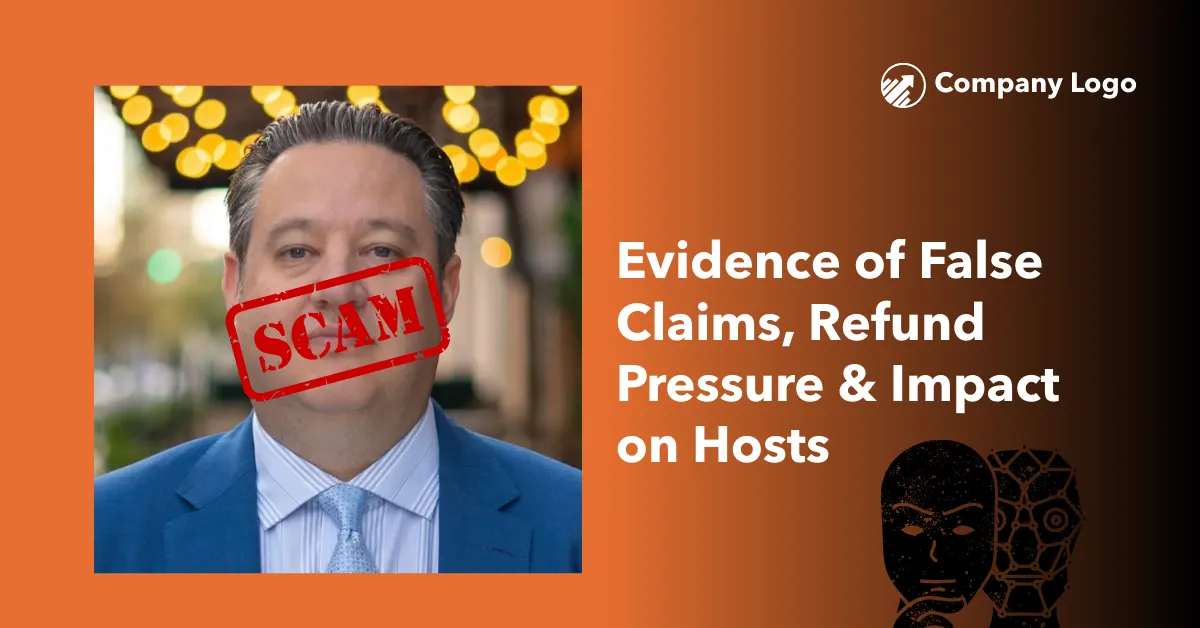
Guest Review Dispute: Evidence of False Claims, Refund Pressure & Impact on Hosts
Overview
This article documents a host’s experience with a guest Scott Brindley whose stay resulted in a series of false claims, repeated refund demands and a retaliatory 1‑star review. Despite immediate responses and documented remediation efforts, the guest continued to push for refunds and publish a one‑star review. According to the Airbnb Scammers site, the purpose of telling this story is not harassment or speculation, but to preserve an evidence‑based record of communications and public reviews that demonstrate a pattern of behavior affecting multiple hosts. All claims are supported by screenshots, inspection reports and timestamped message logs.

Background
Property: Paradise 5G, Medellín, Colombia.
Host status at time of stay: Top 5 % Superhost.
Average rating before incident: 5.0/5.0 over more than two years.
Guest stay duration: 12 nights; the guest departed on day 6.
Outcome: The host provided a partial refund, but the guest left a 1‑star public review.
Prior to this incident, no complaints of mold, safety hazards or sanitation issues had been reported.
The host, a long‑standing Superhost with 57 consecutive 5‑star reviews, had to defend their listing against allegations that threatened their reputation
Chronology of Events
Day 1–2: Initial Contact & Mold Allegation
The guest first contacted the host outside the Airbnb platform (WhatsApp) and claimed a “mold issue” in a non‑bedroom bathroom.
The guest refused phone or video calls and repeatedly pushed for immediate refunds.
No prior mold complaints had been reported before this message.
Immediate Host Response
Within minutes, the host:
Requested that all communication move back to Airbnb.
Offered a same‑day inspection, an in‑person visit, professional cleaning and even a temporary bathroom closure to address the concern.
The guest rejected these offers and escalated refund demands.
Mold Claim Investigation
The host hired a professional mold inspection at personal expense. The inspector found no mold and no evidence of systemic moisture or health risks. Despite this documented result, the guest continued to assert a mold issue.
Off‑Platform Pressure & Review Threats
Evidence shows the guest repeatedly linked refund demands to reviews, requesting that the matter be resolved privately, implying a negative review if demands were not met and refusing to follow Airbnb’s resolution process. Such behavior falls under review manipulation, which is prohibited by Airbnb’s policies.
Public Review After Departure
After leaving early and receiving a partial refund, the guest posted a 1‑star review alleging:
“Systemic mold.”
Unsafe repair visits (despite advance notice and identification for maintenance personnel).
Deceptive practices, which contradicted inspection reports and message history.
The review was published after Airbnb support had been notified and documentation submitted.
Misrepresentation of Maintenance Access
According to the host’s formal escalation document, the guest claimed that “three grown men showed up while my wife and kids were there alone.” In reality, all maintenance personnel were pre‑approved in writing; their names and government identification numbers were provided ahead of time, and access was coordinated transparently through documented messages
Building security was also aware of each entryThe review omitted these critical facts, framing routine maintenance as an unsafe intrusion.
False Narrative About Hot Water
The guest stated there was “no hot water for the first two days.” The host clarified that the issue was merely a hot‑water knob setting; once adjusted, the water worked normally. The guest later acknowledged in writing that the problem was resolved, yet continued to portray it as negligence
Door Incident & Subsequent Damage
The guest claimed a bathroom door was unsafe and fell on his wife. The host immediately had the door professionally repaired, but afterwards the guest himself damaged the door. This damage prompted the host to file an insurance claim against the guest
The review failed to mention the guest’s role in causing further damage after remediation.
False Claims About Cleanliness & Linens
The review described “dirty floors,” “months of dust” and “old, damp linens with holes.” The host responded that these statements were contradicted by professional cleaning records, housekeeping logs and prior and subsequent guest reviewsMoreover, the guest continued to use the property and its amenities, demonstrating that conditions were acceptableNo evidence was ever produced to support these claims
Pattern of Behavior & Retaliatory Intent
The same guest has left similar accusatory reviews for at least two other hosts, using similar language (mold allegations, unsafe conditions, refund pressure and negative reviews when refunds were refused)
During this stay, the guest demanded refunds outside the Airbnb platform; when redirected to Airbnb support, he left a punitive review—behavior consistent with retaliationPublic reviews reveal that this is a repeating pattern, not an isolated disagreement.
Impact on the Host & Listing
The consequences of allowing this review to stand were significant:
Temporary unlisting: The host’s property was briefly unlisted, leading to loss of visibility.
Six days of lost exposure during peak season.
Damage to a perfect 5‑star streak of 57 consecutive reviews and the host’s Top 5 % Superhost status.
Ongoing reputational harm: The host’s reputation suffers as long as the review remains public
Despite providing inspection reports, timestamped message logs, evidence of off‑platform pressure and review threats, and documentation of repeated behavior across hosts, the review was not removed. As a result, the listing incurred high‑season ranking penalties and long‑term reputational damage.
Lessons & Best Practices for Hosts
This case illustrates several steps other hosts can take to protect themselves:
Keep all communication on the platform: Request guests to use Airbnb’s messaging to ensure a verifiable record and avoid off‑platform refund pressure.
Document the property’s condition before and after each stay with photos, cleaning logs and checklists.
Respond promptly and offer reasonable solutions (e.g., professional inspections, cleaning, alternative accommodations).
Commission professional inspections when serious allegations arise; keep written reports for evidence.
Decline off‑platform refund requests and direct guests to Airbnb’s resolution center.
Maintain detailed cleaning and maintenance records to refute claims about cleanliness, utilities or safety.
Report review manipulation or threats of negative reviews tied to refunds to Airbnb’s Trust & Safety team.
Track patterns: If a guest repeatedly leaves similar negative reviews for other hosts, this may indicate bad‑faith behavior; document and share evidence with the platform.
Conclusion & Call for Fair Platform Enforcement
False claims and review abuse harm host livelihoods, property reputations, platform trust and even the credibility of legitimate guest safety reports. When platforms fail to intervene, hosts have little recourse except to document incidents publicly.
This article serves to preserve evidence, warn other hosts, encourage fair enforcement, and promote transparency. It is not harassment; it is a factual account supported by documents and public reviews. All materials referenced are available upon request, and readers are encouraged to review the evidence independently.
Platforms like Airbnb should enforce their own policies consistently: remove reviews containing unsubstantiated health or safety allegations, address review manipulation, and protect both hosts and guests from abusive behavior. Doing so will strengthen trust in the platform and ensure that honest feedback—both positive and negative—remains meaningful.

What Our Clients Say
Check out our latest reviews

Person 1

This is a satisfied customer talking about how amazing you are to increase the confidence of your next buyer.
Person 2
Here is a different angle perspective from another customer showing how you delivered with confidence.
Person 3
Here is a different demographic that is talking about how you went above and beyond and delivered personal service.
Person 4
Lastly, here is yet another angle to show clients a mixed view of how you are perceived and why you should be trusted.